Analogue Inputs and Inserts
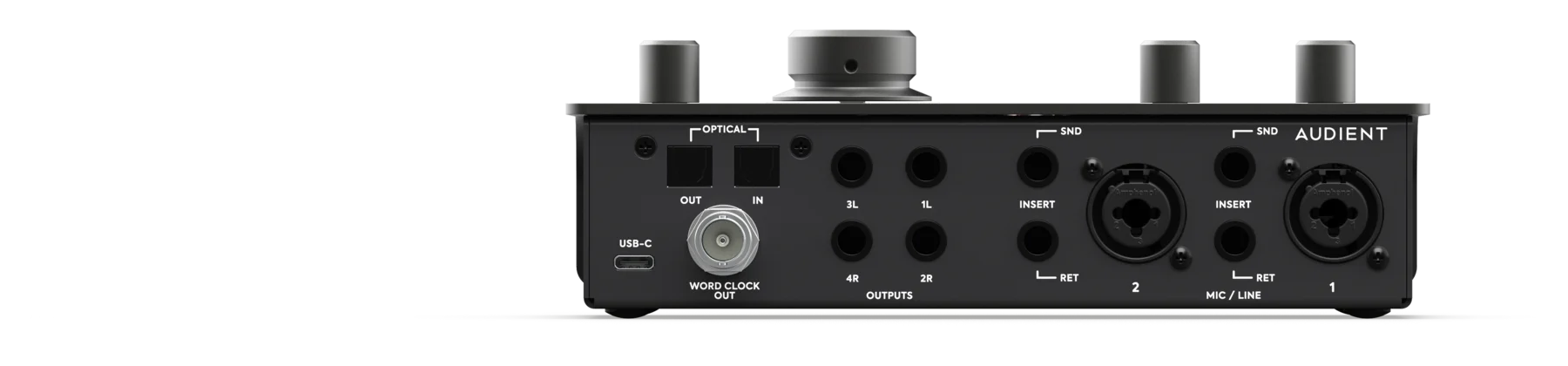
iD24 provides two rear mic/line input channels, a front-panel JFET instrument input for channel 1, and balanced insert send/return connections for both analogue channels.
Microphone inputs
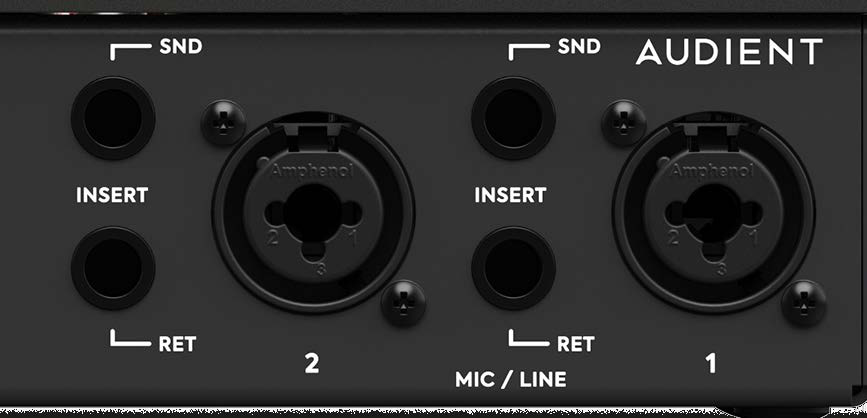
The two Audient Console microphone preamps provide 0 to +58 dB of analogue gain. Each mic input has a 3 kΩ balanced input impedance and accepts a maximum input level of +12 dBu at minimum gain.
Connect microphones using XLR cables.
Line inputs
Connect line-level equipment to the TRS part of either rear combo input. The line input is attenuated before feeding the same Audient preamp architecture, giving a 10 kΩ balanced input impedance, a gain range of -10 to +48 dB, and a maximum input level of +22 dBu.
Instrument input
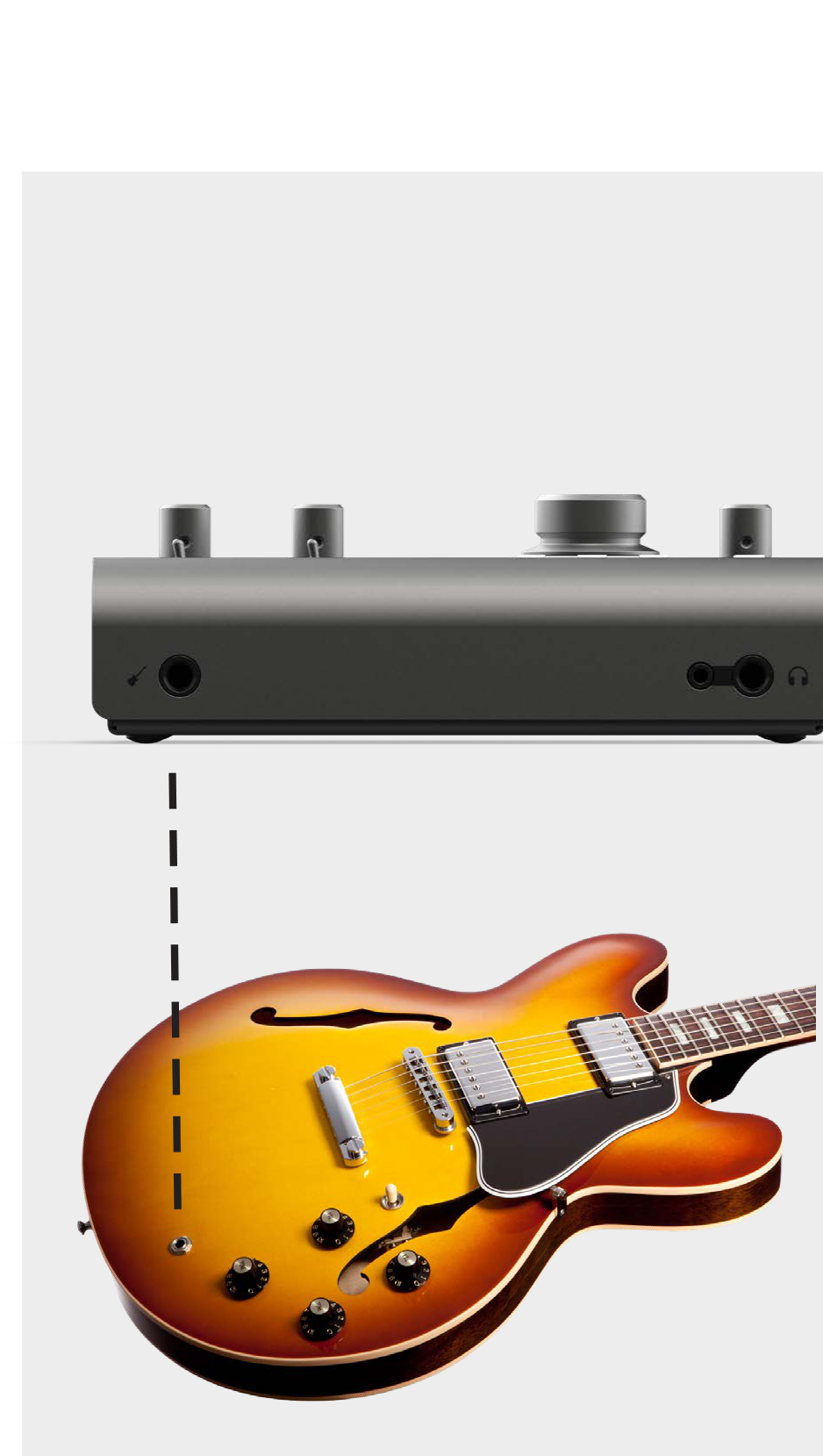
The front-panel Class-A JFET DI is an unbalanced 1/4-inch TS input with 500 kΩ input impedance. Its JFET stage is intended to add a small amount of musical colour/harmonic character for sources such as guitar and bass. Inserting a jack into the instrument input overrides the rear channel-1 mic/line input.
48V phantom power
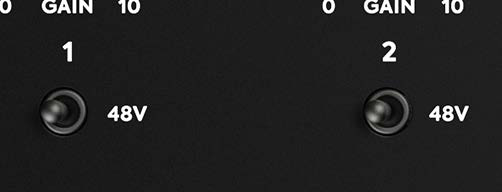
The two 48V switches independently enable phantom power on the microphone XLR inputs.
Only enable phantom power when the connected microphone/device requires it. Phantom power is supplied only to the XLR microphone input. It is not supplied to the TRS line input or the front-panel instrument input.
-10 dB pad
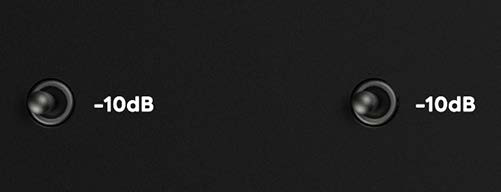
Each input channel has a -10 dB pad. Use it when a source is too hot for the required gain setting or when additional analogue input headroom is needed.
High-pass filter
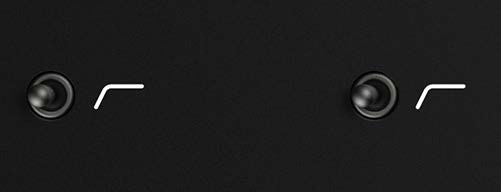
Each analogue input has a 100 Hz high-pass filter. Use it to reduce unwanted low-frequency energy such as handling noise, rumble or excessive proximity effect before conversion.
Balanced inserts
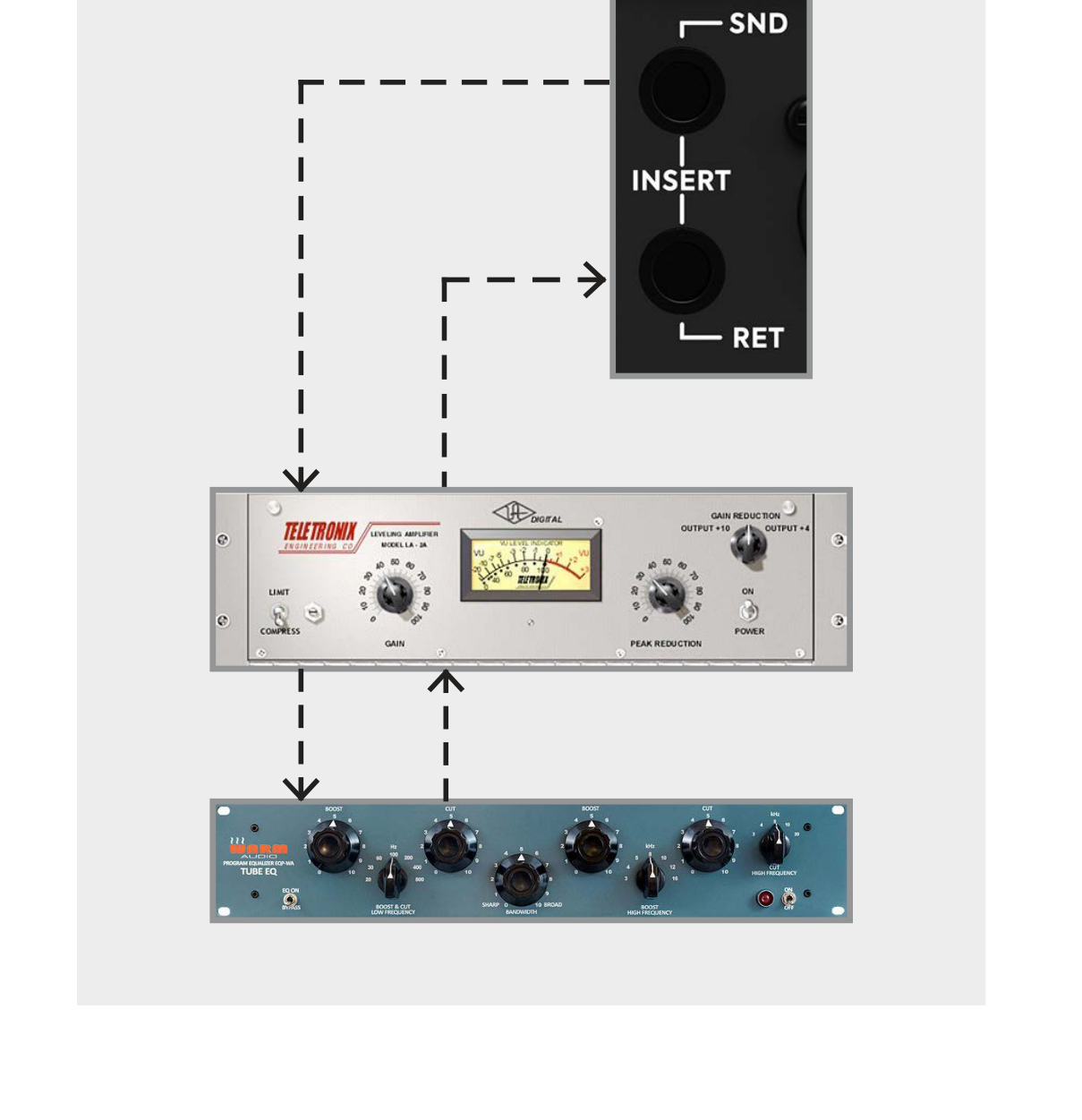
Each analogue input includes a balanced insert send and return before the ADC.
- Insert Send: balanced, output impedance <100 Ω, maximum level +22 dBu.
- Insert Return / direct ADC input: balanced, input impedance >10 kΩ.
- Plugging into the send only does not interrupt the internal signal path; this allows the preamp signal to be split to an external destination.
- Plugging into the return breaks the normalled path and routes the return signal directly to the ADC.
This half-normalled behaviour means an external processor can be patched between the send and return, or the send can be used as a parallel output without removing the preamp signal from iD24.
Direct access to the ADC
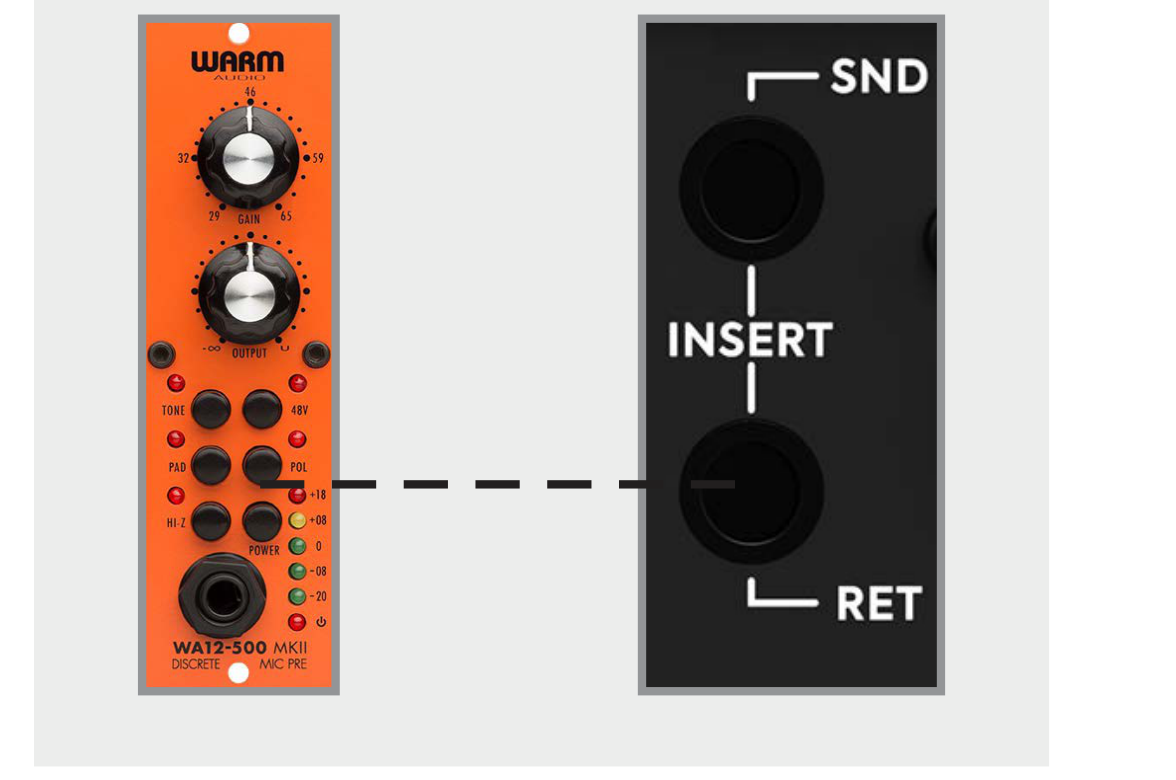
To bypass the iD24 mic/line preamp and feed a converter directly, connect a balanced line signal to the relevant Insert Return. The ADC calibration point is +12.5 dBu = 0 dBFS.
The +12.5 dBu direct-ADC calibration is not the same as the maximum level accepted by the normal line-input analogue path. The rear line input can accept up to +22 dBu before the analogue front end clips.
Continue to Digital I/O and Clocking.