Heritage Output and Mix Bus Processing
Heritage Output Card
The Heritage Output Card provides tonal options on the stereo Mix Bus output.
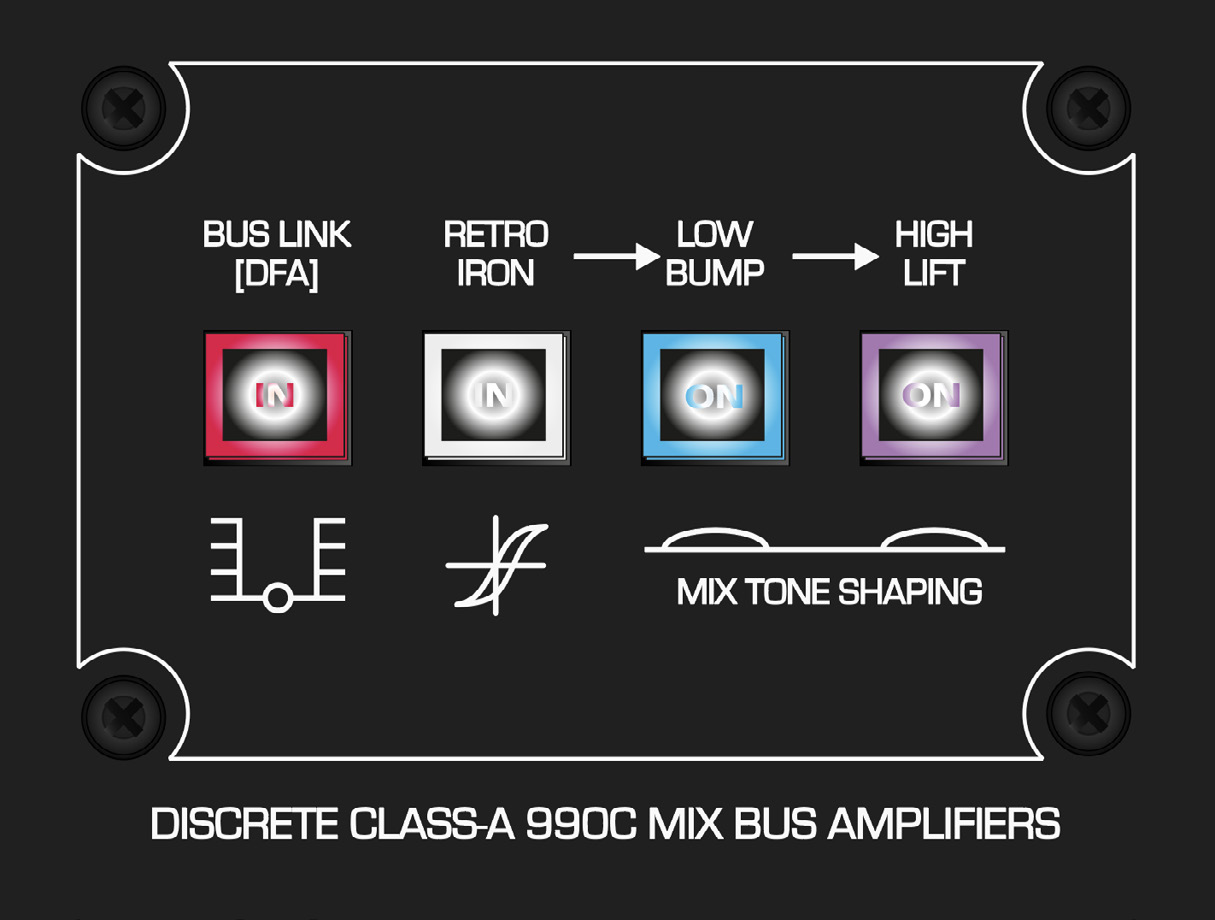
Retro Iron
RETRO IRON inserts a vintage-inspired output stage and two Carnhill transformers into the stereo mix path. The manual describes the audible result as additional weight and punch, particularly in the low end, with a wider and more pronounced sound stage.
Low Bump
With Retro Iron engaged, LOW BUMP adds a broad approximately +2 dB lift centred around 60 Hz.
High Lift
With Retro Iron engaged, HIGH LIFT adds a broad approximately +2 dB lift around 20 kHz.
Low Bump and High Lift are part of the Retro Iron circuit and only affect the mix when Retro Iron is engaged.
Bus Link / DFA
When the optional 48 Bus Mod is installed, BUS LINK combines the second set of 24 buses with buses 1–24 so the console can operate as a conventional 24-bus desk across all input channels.
When the 48 Bus Mod is not installed, the switch is labelled/used as DFA in the source manual.
Bus Compressor
The stereo VCA compressor is located after the main Mix Insert and before the Master Fader. It is optimised for mix-bus processing and can be bypassed completely when not required.
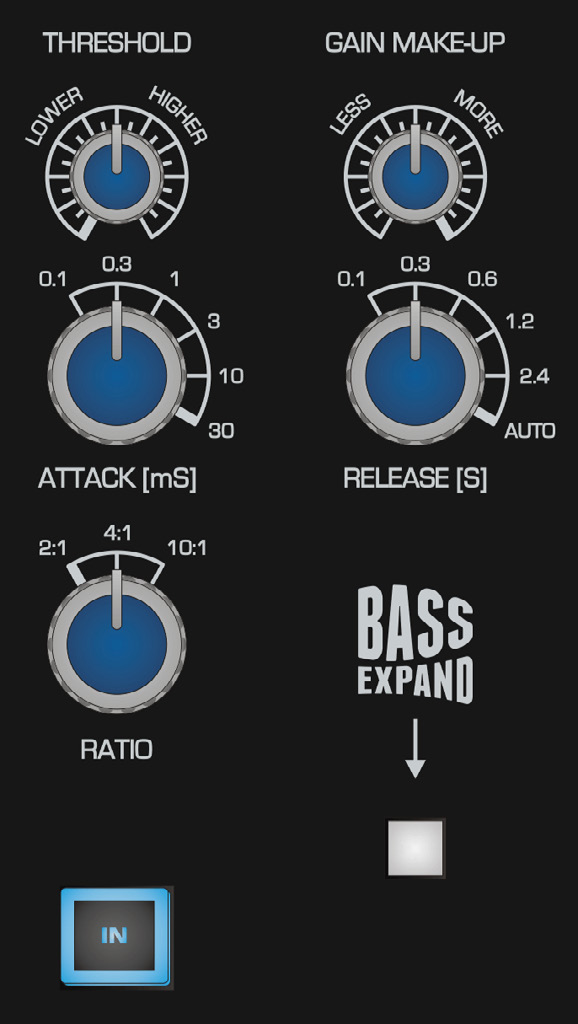
Controls
- THRESHOLD sets the level at which compression begins.
- GAIN MAKE-UP restores output level lost through gain reduction.
- ATTACK selects 0.1, 0.3, 1, 3, 10 or 30 ms. Faster settings react more quickly to transients; slower settings allow more of the initial transient through.
- RELEASE selects 0.1, 0.3, 0.6, 1.2 or 2.4 seconds, plus AUTO.
- RATIO selects 2:1, 4:1 or 10:1.
- BASS EXPAND places a 350 Hz, 6 dB/octave high-pass filter in the detector sidechain so low and lower-mid frequencies have less influence on compression.
- IN places the compressor in the stereo Mix Bus.
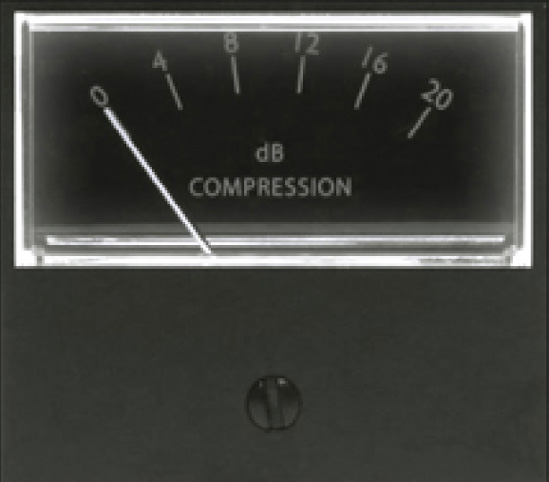
- GAIN REDUCTION METER shows the amount of compression being applied.
The manual recommends using compression deliberately and notes that only a small amount of gain-reduction movement may be required to make a mix feel more cohesive.
A higher threshold and higher ratio can also be used to control occasional peaks.
Master Fader
The Master Fader controls the final stereo console output after Mix Bus processing.

Unlike the channel faders, the Master Fader is calibrated with 0 dB at the top of its travel. Its main purpose is final output control and manual fade-outs.
Under normal operating conditions, keep the fader at 0 dB. If the Master Fader has to be pulled down substantially to obtain a sensible output level, reduce levels feeding the Mix Bus instead.
At the bottom of the fader travel the signal is effectively off.
Continue to Control Room, Studio and Foldback.