Stereo Inputs, Subgroups and Masters
Stereo inputs
The four Stereo Inputs return effects or other stereo line-level signals without using a complete input strip. They can route to the stereo Mix, to the recording buses and to the Foldback system, so an effect return can also be routed back to the recording system when required.

Each Stereo Input provides:
- Bus routing switches with SHIFT for buses 9–16.
- Foldback A and Foldback B sends.
- TRIM with ±20 dB adjustment.
- Rotary level fader.
- MIX assignment.
- SOLO.
- CUT.
Subgroups and Line Inputs 17–24
Buses 1–8 also feed eight subgroup paths. Each subgroup provides pan, Mix assignment, Solo, Cut, an insert and a fader.

The eight subgroup Insert Returns can also be used as Line Inputs 17–24 during mixdown. A return connector cannot simultaneously act as both a subgroup insert return and an additional line input.
The subgroup faders have a normal 0 dB position and provide up to +10 dB of gain.
Auxiliary masters and linking
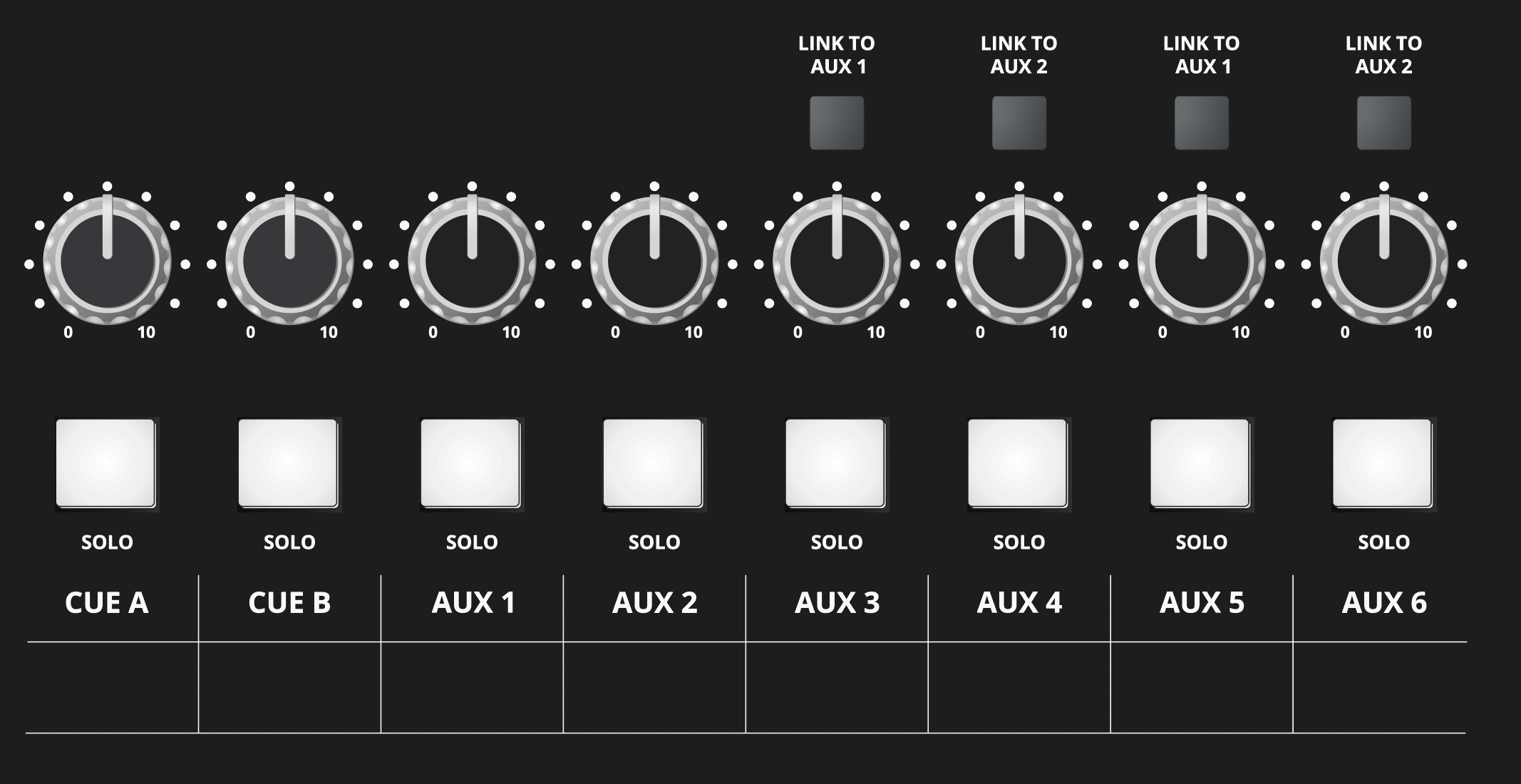
Each auxiliary has a master level control and AFL Solo. The Link function combines selected auxiliary buses so LF and SF sends can contribute to a common effect destination.
Supported combinations are:
- Aux 3 and Aux 5 can be linked to Aux 1.
- Aux 4 and Aux 6 can be linked to Aux 2.
When linked, Aux 1 or Aux 2 acts as the respective overall master output.
Bus master trims
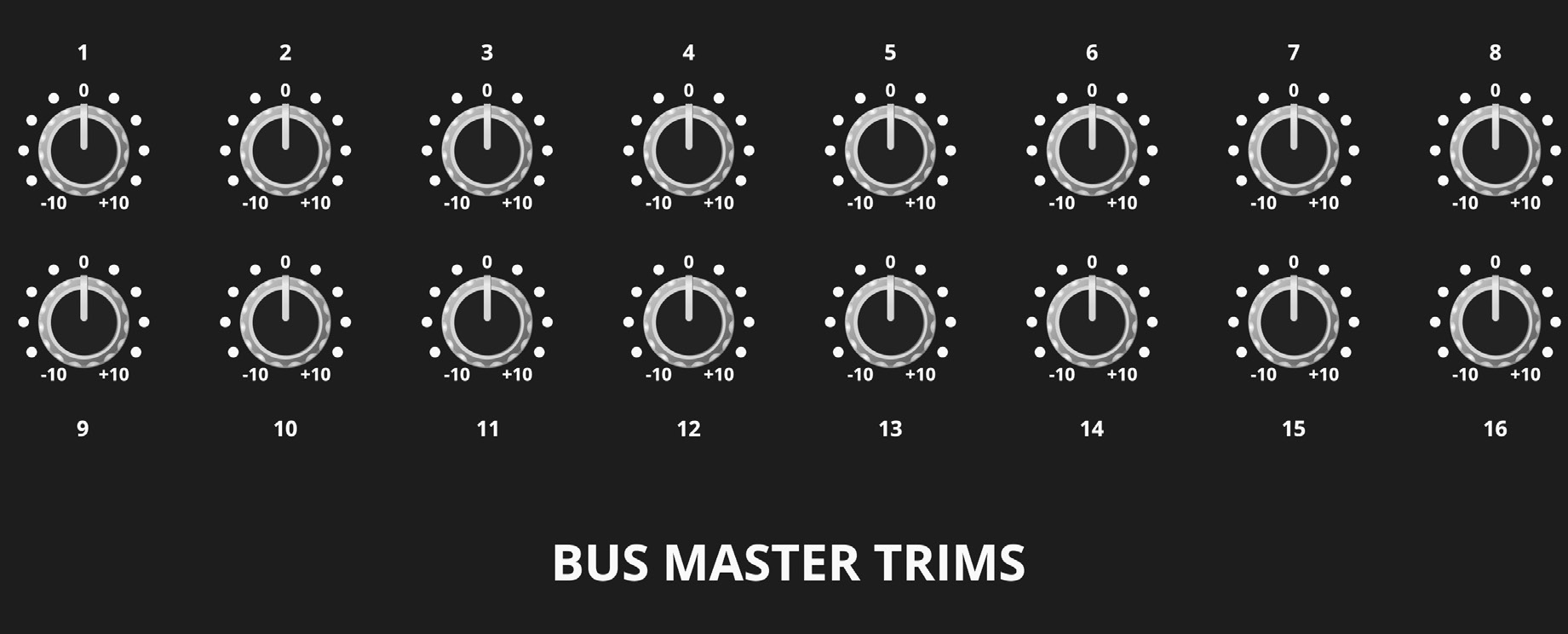
Each bus output has a final master trim range of ±10 dB.
Master Fader
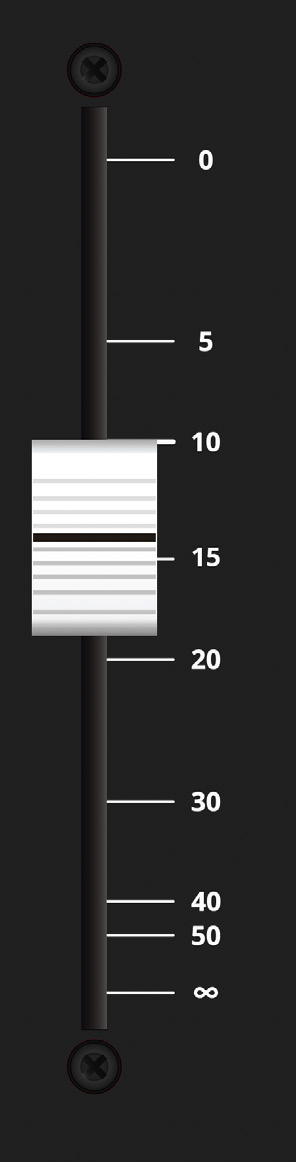
The Master Fader controls the stereo Mix output and is calibrated with 0 dB at the top of its travel. Under normal operating conditions it should remain at or near 0 dB. If substantial attenuation is repeatedly required, reduce the levels feeding the Mix bus to maintain a more appropriate gain structure.
Continue to Rear-Panel Connections.